Key Takeaways
- Anger is short-lived; bitterness is anger that stayed. Anger rises when you feel wronged and fades. Bitterness is the lasting resentment that remains when the hurt is never resolved.
- Wrath is not a separate clinical emotion. It is an older word for intense, revenge-seeking anger. Psychologists call the same experience rage or hostility.
- Anger and bitterness are kept alive by replaying the event. Each mental replay renews the anger instead of letting it fade.
- Long-held anger has a measurable cost. A 2009 meta-analysis linked anger and hostility to a 19% higher risk of heart disease events in healthy adults.
- Bitterness can be unlearned. Naming the hurt, interrupting the replay and reframing the event are skills that structured anger management teaches step by step.
Anger and bitterness are related but not the same. Anger is a fast emotion that responds to something happening now. Bitterness is what anger can become when the original hurt is never acknowledged, repaired or released. Bitterness looks backward, and it can last for years.
This guide explains the difference between anger, bitterness and wrath, how anger hardens into bitterness, why some people stay bitter and angry, and what actually helps. The counselors at Valley Anger Management in Woodland Hills, California, work with this pattern every week, in live Zoom classes and self-paced online courses.
What is the difference between anger and bitterness?
Anger is a short, intense emotion that rises when you feel wronged and usually fades once the moment passes. Bitterness is the lasting state that can remain when anger is never resolved: a persistent sense of having been treated unfairly, mixed with resentment and helplessness, that keeps the original hurt alive long after the event.
The American Psychological Association describes anger as an emotion characterized by antagonism toward someone or something you feel has deliberately done you wrong. Anger has a purpose. Anger signals that a boundary was crossed and gives you the energy to respond.
Bitterness has no such forward purpose. Bitterness keeps returning to the same event. The person who feels bitter is often still waiting for an apology, a correction or a fair outcome that may never come.
German psychiatrist Michael Linden studied this pattern under the name embitterment. In his research, embitterment follows an ordinary but significant life event, such as a job loss, a divorce or an unfair decision at work. The core feature is a prolonged feeling of injustice. Linden proposed “posttraumatic embitterment disorder” for the most severe cases. That label is a research proposal, not a formal diagnosis in the DSM-5.
What is the difference between anger and wrath?
Wrath is not a separate emotion in clinical psychology. Wrath is an older word, from religious and literary tradition, for intense anger that seeks punishment or revenge. Psychologists describe the same experience as rage or hostility: anger at its highest intensity, usually aimed at making someone pay for a wrong.
In Christian tradition, wrath is one of the seven deadly sins. That history explains why the word carries a moral weight that “anger” does not. Anger can be healthy. Wrath, as the word is used, almost never is.
The APA separates anger from aggression. Anger is the feeling. Aggression is behavior meant to harm. Wrath sits at the point where the feeling starts to push toward that behavior.
How does anger turn into bitterness?
Anger turns into bitterness through rumination, the habit of replaying a hurt over and over without resolving it. Each replay renews the anger instead of letting it fade. Over time the hurt stops being one event and becomes part of how you see the other person, the situation and eventually yourself.
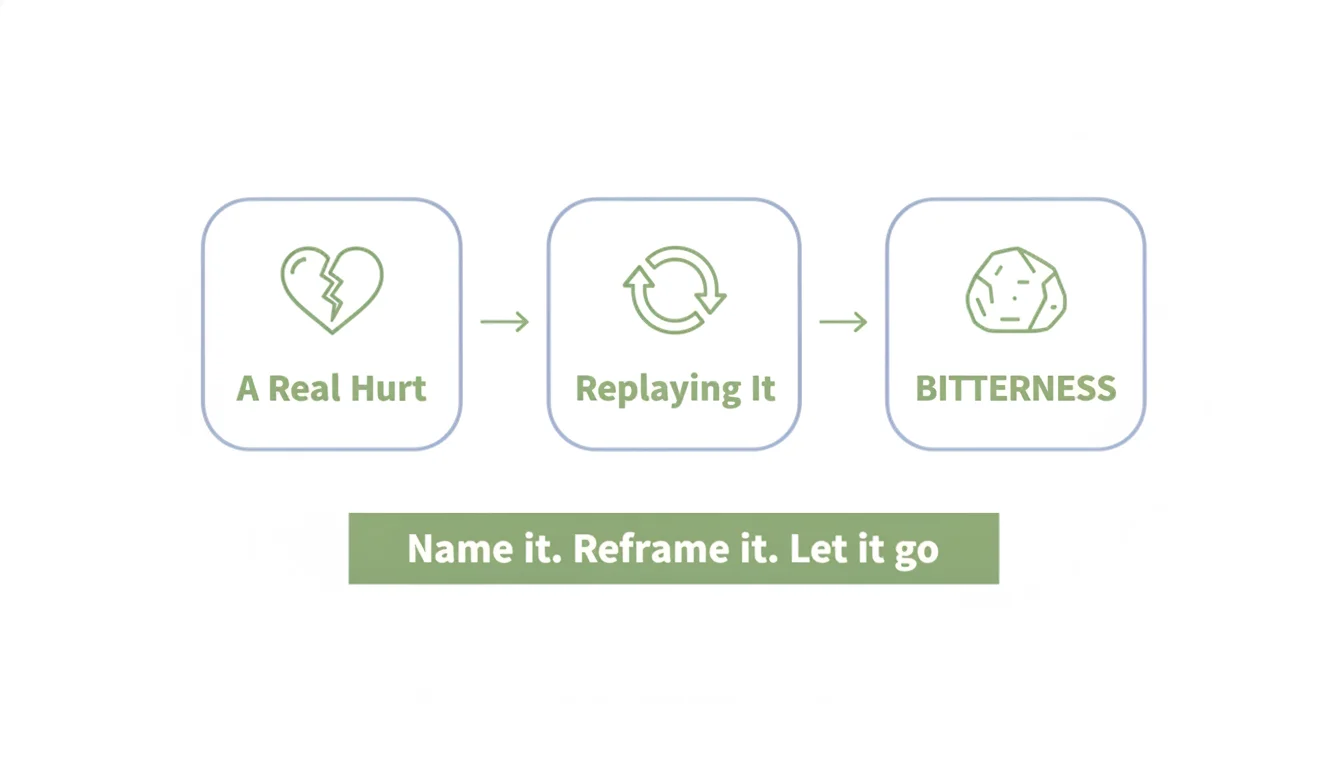
The process usually follows three steps:
- A real hurt. Someone treats you unfairly, or something you counted on is taken away. The anger that follows is a normal response.
- Replaying the hurt. The event is never discussed, repaired or closed. You return to the event in your mind, rehearse what you should have said, and feel the anger again each time.
- Bitterness. The anger settles into a background state. You expect unfairness, you trust less, and new situations get read through the old hurt.
Psychologist Charles Spielberger described a useful distinction here. State anger is a passing reaction to a specific moment. Trait anger is a lasting tendency to feel angry across many situations. Bitterness sits close to the trait end. Bitterness is no longer about one argument. Bitterness has become a way of seeing.
Why am I so bitter and angry?
Most people who feel bitter and angry are carrying a specific hurt that was never acknowledged or repaired, such as a betrayal, a job loss, a divorce or an unfair decision. Ongoing stress, poor sleep and a sense of powerlessness make bitterness stronger. Feeling bitter is a common human response to injustice, not a character flaw.
Common sources of lasting bitterness include:
- Betrayal by someone close, such as a partner, a family member or a friend.
- Unfair treatment at work, such as being passed over, blamed or let go.
- A divorce or custody conflict that still feels unresolved.
- A legal or financial outcome you believe was unjust.
- Old family hurts that were never talked about.
Bitterness often grows strongest when you feel you cannot change the outcome. Helplessness and anger together are what make the feeling stick. Asking “why am I so bitter?” is a useful first step. The question means you have noticed the pattern, and noticing it is where change begins.
What does long-term anger do to your health and relationships?
Long-held anger keeps the body’s stress response active. A 2009 meta-analysis in the Journal of the American College of Cardiology found that anger and hostility were linked to a 19% higher risk of heart disease events in healthy adults and a 24% higher risk in people who already had heart disease. Bitterness also strains trust and closeness in relationships.
The study by Yoichi Chida and Andrew Steptoe pooled dozens of earlier studies. The finding is an association, not proof that anger alone causes heart disease. Still, the authors concluded that managing anger and hostility may help protect heart health.
The effect on relationships is easier to see. Bitterness tends to show up as:
- Sarcasm or cynicism in everyday conversations.
- Bringing up old grievances during new disagreements.
- Pulling away from people instead of talking things through.
- Expecting to be let down, which can make others feel judged in advance.
How do you overcome anger and bitterness?
You overcome bitterness by working on the anger underneath it. Name the original hurt clearly, interrupt the habit of replaying it, reframe the story you tell about the event, and decide what you still need from the person involved. These are learnable skills, and structured anger management teaches them step by step.
- Name the hurt precisely. Write down what happened, what you lost and what you wish had happened instead. A specific hurt is easier to work through than a general sense of grievance.
- Catch the replay and interrupt it. When you notice yourself rehearsing the event, shift your attention to your breathing or to the task in front of you. Slow breathing and other relaxation techniques for anger management calm the body enough for clear thinking to return.
- Reframe the story. Cognitive techniques ask whether the story you tell about the event is the whole truth. “They ruined my life” can become “They hurt me badly, and I am still building a good life.”
- Separate letting go from approval. Releasing bitterness does not mean the wrong was acceptable. Releasing bitterness means the wrong no longer gets to run your days.
- Talk to someone trained. A licensed counselor or a structured anger management class gives you a place to practice these skills with guidance.

Dr. Martin Luther King Jr. put the choice plainly in his 1963 “I Have a Dream” speech: “Let us not seek to satisfy our thirst for freedom by drinking from the cup of bitterness and hatred.” The injustice he named was real. His point was that bitterness would not repair it.
When should you get help for anger that has turned into bitterness?
Consider structured help when bitterness is affecting your work, your relationships or your health, when you keep replaying the same event for months, or when a court, employer or probation officer has asked you to complete a program. Anger management classes teach the skills to manage anger and release resentment in a guided setting.
Valley Anger Management has worked with more than 13,000 clients over 17 years from its office in Woodland Hills, California. Programs run as live Zoom anger management classes led by a counselor, or as self-paced anger management courses online that you complete on your own schedule. If you are unsure what a class involves, our guide What Is an Anger Management Class? walks through a typical session.
If anger ever includes thoughts of harming yourself or someone else, call or text 988 to reach the 988 Suicide & Crisis Lifeline right away. The line is free and open 24 hours a day in the United States.
Frequently Asked Questions
Is bitterness a mental illness?
No. Bitterness is a common emotional response to injustice, not a mental illness. Researchers have proposed “posttraumatic embitterment disorder” for severe, long-lasting cases, but the label is not a formal diagnosis in the DSM-5. Bitterness that disrupts daily life is still worth working on with a counselor.
Is wrath an emotion?
Wrath is a word for an emotion rather than a separate one. Wrath describes anger at its most intense, usually combined with a wish for revenge or punishment. Psychologists would call the same experience rage or hostility.
Can anger management help with resentment?
Yes. Resentment and bitterness are forms of unresolved anger, so the core anger management skills apply directly. Those skills include recognizing triggers, interrupting rumination, reframing the event and communicating clearly.
How long does it take to let go of bitterness?
There is no fixed timeline. Letting go depends on how deep the hurt was, how long it has been replayed and whether the situation is still ongoing. Most people notice a change once they start practicing specific skills rather than waiting for the feeling to fade on its own.
Sources
- American Psychological Association, Anger.
- Linden, M. et al., Posttraumatic Embitterment Disorder: Definition, Evidence, Diagnosis, Treatment, reviewed in Psychiatric Services, 2007.
- Chida, Y. and Steptoe, A., “The association of anger and hostility with future coronary heart disease,” Journal of the American College of Cardiology, 2009; 53: 936-946. Summary.
If an old hurt is still shaping how you feel today, you do not have to work through it alone. Call Valley Anger Management at 818-704-8116 to talk about which program fits you.
Recent Post
Anger is an emotion that has the potential to rupture [...]